

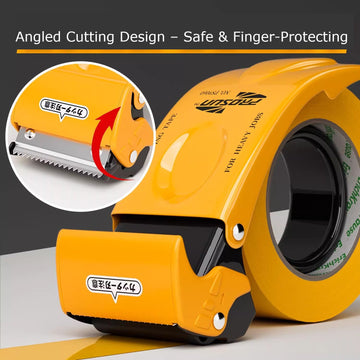
Quick answer: the best packing tape dispenser is the one that matches your tape width, core, roll size and packing volume. A pistol-grip tape gun suits mobile carton sealing, a compact palm-grip dispenser offers close control, a bench dispenser keeps both hands near the work surface, and an automatic dispenser is mainly useful when repeatable tape lengths justify the extra equipment.
For most Australian home, office and small-business packing, begin with a manual dispenser made for the exact roll width you already use. Check the blade and guard, loading path, roller, tension control, handle or palm grip, and whether the complete roll fits before buying.
Best Packing Tape Dispenser: What Matters Most?
A dispenser cannot improve an unsuitable tape or damaged carton. Its job is to hold the roll, guide the tape, apply useful pressure and provide a controlled cut. The right tool should make that process repeatable without forcing the tape through a mismatched holder.
| Check | Why it matters | What to confirm |
|---|---|---|
| Tape width | The roll must sit correctly across the roller and cutter | Maximum and minimum supported width in millimetres |
| Core and roll size | A matching width does not guarantee the holder or loaded roll will fit | Core diameter, hub design and maximum roll diameter |
| Blade and guard | The cutting system affects control and safe handling | Blade type, guard design and replacement instructions |
| Tension or brake | Too little tension can create loose tape; too much can stretch or tear it | How tension is adjusted and whether the tape unwinds smoothly |
| Grip and balance | The tool should be controllable for the user's packing routine | Handle style, palm clearance, weight and reload access |
| Workload | Occasional moving boxes and a busy packing bench need different setups | Manual, bench or automatic operation and maintenance needs |
Types of Packing Tape Dispensers
Pistol-grip tape guns
A pistol-grip dispenser carries the roll above a handle and applies tape through a front roller. It is portable and commonly used to seal cartons on benches, floors or pallets. A well-matched model lets the operator press the tape onto the box, guide it along the seam and tilt the blade into the tape at the end of the strip.
Choose this format when you move between cartons or need one-handed control. Check handle fit, roller alignment, blade guard, tension and the path used to thread the tape.
Palm-grip dispensers
A palm-grip or mouse-style dispenser keeps the hand closer to the tape and carton. Its compact shape can be useful where a long pistol handle feels bulky or where close placement matters. The trade-off is that loading, blade clearance and hand position differ from a conventional tape gun, so review the product instructions before use.
Bench and tabletop dispensers
A bench dispenser stays at a fixed packing station. It can suit tasks where the user pulls a tape length before applying it by hand or needs both hands near the package. Confirm that the base, cutter and roll holder are designed for carton tape; a small office stationery dispenser is not automatically suitable for wide packaging rolls.
Automatic tape dispensers
Automatic dispensers can feed and cut repeatable lengths. They may help a standardised, high-volume workflow, but they add power, setup, cleaning and servicing requirements. Compare throughput, tape compatibility, cut-length range, guarding and support before assuming automation will reduce total cost.
Current Boxy Packing Tape Dispenser Options
Boxy Packaging currently has three active manual dispenser formats. The comparison below uses only the dimensions and construction stated in the live product listings; it does not rank one tool as universally best.
Heavy-Duty Tape Dispenser Yellow
The yellow heavy-duty tape dispenser is listed for standard packaging tape from 4 cm to 5 cm wide. Its product page describes a serrated stainless-steel blade, replaceable-blade design, angled cutter, roll-retention slots and an ergonomic grip.
Consider it when you want a conventional handheld format for 40-50 mm rolls. Confirm the loaded roll, core and preferred tension before using it for a long packing run.
Heavy-Duty All-Metal Palm-Grip Dispenser
The heavy-duty all-metal packing tape dispenser uses a compact palm-grip design. Its live specification lists all-metal construction, a fixed serrated metal blade and compatibility with tape from 40 mm to 50 mm wide.
This format is worth comparing when compact control and metal construction matter more than a pistol handle. Check blade position and the loading method against your normal hand placement.
Heavy-Duty Handheld Tape Dispenser Gun
The heavy-duty handheld packaging tape dispenser gun is specified for 5 cm tape. Its listing describes an ABS-plastic and metal frame, a serrated steel blade with a plastic guard, a roller feed and product dimensions of approximately 21 cm long by 14.2 cm high.
Compare this model when you prefer a full pistol-grip tape gun for 50 mm rolls. As with every dispenser, verify roll fit rather than relying on width alone.
Will a Tape Roll Fit the Dispenser?
Check these specifications together:
- Roll width: the measurement across the tape, usually stated in millimetres.
- Core diameter: the inside diameter of the roll's cardboard or plastic core.
- Loaded roll diameter: the outside size of a new roll, which can matter with long rolls.
- Tape thickness and backing: thicker or reinforced tape may cut and unwind differently.
- Adhesive unwind: some rolls need more tension adjustment than others.
Boxy Packaging's current clear packing tape is listed as 48 mm wide, 150 m long, 52 micron and a 76 mm core. Its width sits within the stated range of the yellow and all-metal dispensers, but confirm the hub and full loaded roll fit before treating any pairing as approved.
For more detail on tape specifications, read the packing tape types and microns guide.
Blade, Guard and Safe Handling
Packaging-tape cutters use sharp or serrated blades. Keep fingers and loose material away from the cutting edge, use the guard or cover where supplied, and follow the product's loading and maintenance instructions.
- Inspect the blade, guard, roller and frame before use.
- Do not test blade sharpness with a finger.
- Place the tool where the blade will not contact a person reaching across the bench.
- Use the specified replacement part and procedure if the blade is serviceable.
- Remove a damaged dispenser from use rather than forcing it through a packing shift.
- Disconnect powered automatic equipment before clearing or servicing it, following its manual.
This guide is general purchasing information. Workplace procedures, training and the manufacturer's instructions take priority.
How to Load a Manual Packing Tape Gun
Designs vary, so use the product instructions first. A common manual sequence is:
- Identify the adhesive side and the direction in which the roll should unwind.
- Seat the roll fully on the holder or hub without forcing it.
- Pull a short tape leader toward the roller and guide plate.
- Feed the tape through the path shown for that dispenser, keeping the adhesive side oriented correctly.
- Test the unwind and tension away from the carton.
- Check that the blade and guard operate as intended before starting work.
If the tape sticks to the roller, curls back or will not feed, stop and recheck orientation and threading. Do not reach into a blade area while pulling on jammed tape.
How to Use a Tape Gun on Boxes
- Use a sound carton with flaps that close without excessive force.
- Start the tape with enough contact on one side of the seam.
- Guide the roller along the carton while applying consistent pressure.
- Continue beyond the opposite edge so the tape contacts the carton face.
- Use the designed tilt or cutter action, keeping the other hand clear.
- Press down loose edges and inspect the finished seal.
The dispenser applies tape; it does not establish whether the tape, carton or closure pattern is suitable for the contents. Test the complete package for its shipping and storage conditions.
Tension, Wrinkles and Tape Waste
Tension should allow a smooth unwind while keeping the tape controlled. Too little can make the roll overrun or the tape sag. Too much can stretch the backing, pull the tape away from the carton or make the operator use unnecessary force.
Adjust in small steps and test on the actual roll. Wrinkles can also come from a misaligned roller, damaged carton flap, incorrect tape path or uneven application angle. Changing the dispenser will not fix every adhesion problem; check the tape and carton too.
How to Fix a Jammed Tape Dispenser
- Stop using the cutter and place the dispenser securely.
- Check whether the roll is seated squarely on the hub.
- Confirm the tape is threaded in the correct direction.
- Remove loose tape from the roller without touching the blade.
- Inspect for adhesive build-up, damage or an obstruction.
- Reset the tension to a moderate starting point and test again.
Follow the manufacturer's cleaning instructions. Avoid applying oils or solvents unless the product documentation allows them, because they may contact the tape, roller or packaging.
Is a Tape Dispenser Worth It?
A manual dispenser is usually worth comparing when you seal cartons regularly, lose the tape end, struggle to make controlled cuts or need a consistent application process. For only an occasional small parcel, a separate cutter and careful hand application may be enough.
Measure value by fit and workflow rather than a fixed price threshold. Useful indicators include time per carton, wasted tape, reload frequency, seal consistency and whether the tool can be handled safely by the intended user.
Where to Buy Packing Tape Dispensers in Australia
Use the live packing tape dispenser collection to compare current Boxy formats and availability. Check product specifications at the time of purchase because models, prices and stock can change.
Also compare the tape and dispenser together. The packing tape collection provides current roll dimensions, while each dispenser page states its own width and construction details.
Frequently Asked Questions
What is the best packing tape dispenser?
The best dispenser is a safe, controllable model that fits the exact tape width, core and loaded roll used in your workflow. Choose the format by workload and packing position rather than a universal ranking.
What is the best tape gun for packing boxes?
For mobile carton sealing, compare pistol-grip tape guns by roll fit, blade guard, roller, tension and handle control. Test the selected tape and carton together before a large packing run.
Is a tape dispenser gun better than a palm-grip dispenser?
Neither format is always better. A pistol grip provides a conventional handle and reach, while a palm-grip design keeps the hand closer to the carton. The better choice depends on roll fit and user preference.
What is the best automatic tape dispenser?
Automatic equipment should be selected against required cut lengths, compatible tape, throughput, guarding, power, service support and total operating cost. A manual tool may be more practical when volume is variable or low.
Can I use any brand of packing tape in a dispenser?
Brand is less important than physical and operating compatibility. Confirm width, core, loaded diameter, thickness, backing and unwind behaviour for the exact roll.
Why does my tape gun keep jamming?
Common causes include reversed loading, an unseated roll, excess tension, adhesive on the roller, damaged tape or a bent component. Stop, keep clear of the blade and follow the model's loading instructions.
Does a shipping tape gun work with 48 mm tape?
Only when 48 mm falls within the dispenser's stated range and the core and loaded roll also fit. The three current Boxy dispensers described above are listed for 40-50 mm or 50 mm tape, but each pairing still needs a fit check.
Bottom Line
Choose a packing tape dispenser as part of a system: tape, roll, cutter, carton, operator and workload. Start with width and core fit, then compare blade protection, tension, roller, grip and maintenance. A current product specification and a short packing trial are more reliable than a fixed price list, unverifiable review or universal best label.